If the council grants planning permission, this Government-funded facility will house approximately 27 million specimens, following the largest move from the museum’s collection in well over a century.
The structure would be built with high levels of sustainability and energy efficiency in mind, as well as meeting international collection standards, preventing the items from deteriorating because their current storage conditions are no longer suitable.
These specimens, none of which are currently on display, range from microscopic organisms that can live in space and ocean floor samples to decades-old archive documents and whale remains.
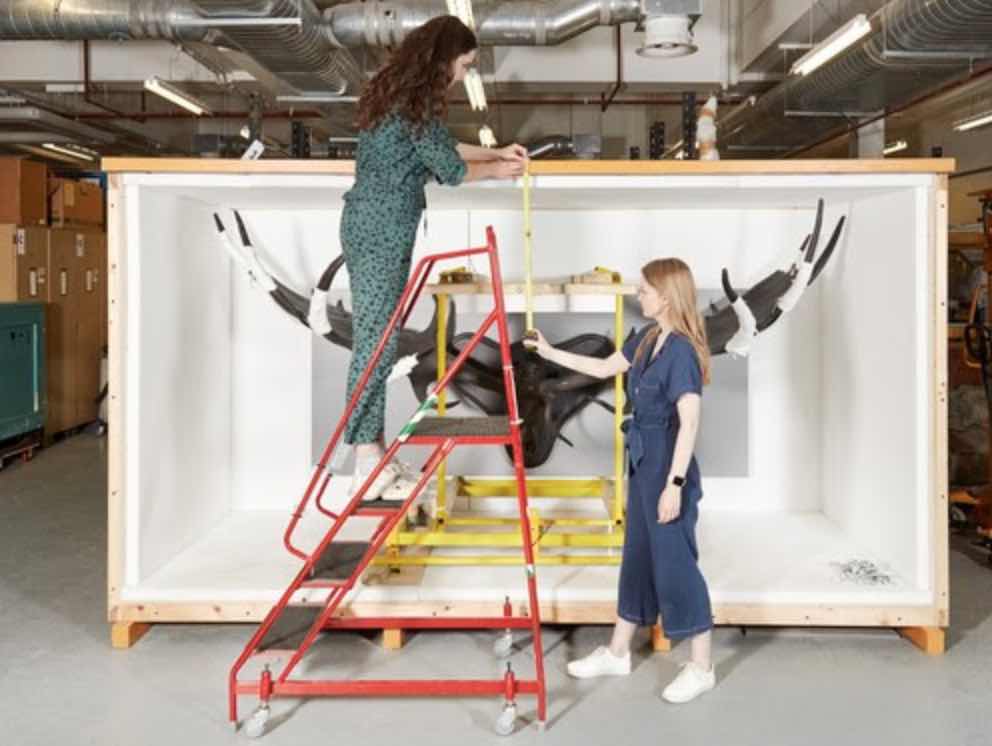
They include barnacles studied by Charles Darwin, who developed the theory of evolution, and the head of a megaloceros, a type of deer that lived during the Ice Ages (pictured above, images courtesy of the museum’s trustees).